



Wiggins trade grade: win-win! Thunder save $61 million, grade A; Hawks acquire quality wing, grade A+


On June 22, Beijing time, the Thunder traded Aaron Wiggins to the Hawks for two second-round draft picks. Even before the start of the offseason, outsiders knew Oklahoma City had to cut salaries; sticking with the existing lineup would trigger an enormous luxury tax, making Wiggins the first piece to be moved in the team's cost-cutting plan.


Wiggins is a homegrown rotation player for the Thunder; selecting him with the 55th pick in the 2021 NBA Draft was a masterstroke. During the Thunder's 2025 championship run, he made significant contributions, hitting several clutch shots and solidifying the team's wing rotation.
Seeing Wiggins leave, many Thunder fans are understandably disappointed, but this move was a necessary step to ensure the team's long-term financial health. Renowned U.S. media outlet ClutchPoints, considering both short-term gains and long-term impact, gave grades to both teams for this trade, which appears to be a win-win deal.
Thunder grade A: Key first step in reducing luxury tax

Looking at it in isolation, some might think the Thunder could have gotten more in return for Wiggins. His contract is very team-friendly; aside from a down 2025-26 season, he has proven he can provide consistent value on a top-tier team. With a total salary of about $25 million over three years, most teams would be willing to take him on.
But the Thunder's core need was to find a team that could absorb Wiggins' contract using a salary exception without sending out any players. The Hawks had a trade exception from the Luke Kennard trade in February that perfectly fit the bill, allowing the Thunder to significantly reduce their luxury tax bill.
ESPN salary cap expert Bobby Marks estimated that before the Wiggins trade, the Thunder's luxury tax total was as high as $213 million; this deal directly cuts $61 million in tax liability, and the Thunder will continue to make moves to further clear salary.
Thunder fans who have accompanied the team through its rebuild and tough times can't help but feel sentimental. Wiggins was part of the Thunder's original young core; the team selected him late in the second round and gradually developed him into a reliable rotation player.
But now the Thunder's wing depth is so abundant that losing Wiggins won't shake the rotation system at all. Moreover, during the playoffs he had lost the coach's trust and could only play in garbage time.
This championship-caliber Thunder team no longer needs Wiggins at its roster level, which is a necessary trade-off that all title contenders must make.
Hawks grade A+: Acquired quality wing to strengthen the roster
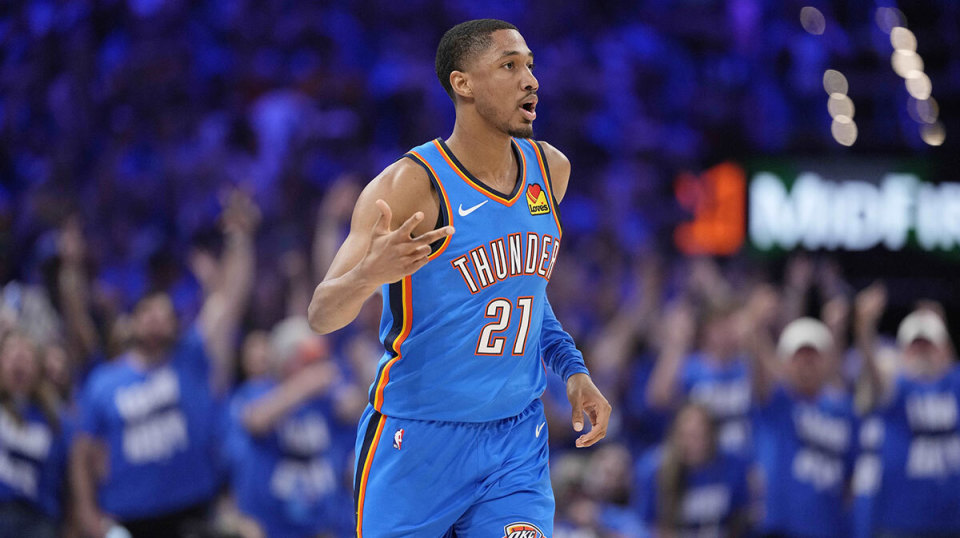
Wiggins is by no means a game-changing superstar. Last season he played 65 games (21 starts), averaging 21.8 minutes per game with 9.4 points, 3.1 rebounds, and 1.7 assists. His shooting efficiency declined significantly: in the 2024-25 season he shot 49%/38%/83% from the field, three-point line, and free-throw line respectively, but last season those numbers dropped to 43%/29%/74%.
His declining scoring efficiency is a concern; his true shooting percentage has dropped for three consecutive seasons, and the team hasn't increased his usage, so the decline cannot be explained by more shot attempts.
Even so, the Hawks' low-cost acquisition of Wiggins is a smart move. In the recent championship season, Wiggins was still a reliable backup for the Thunder, hitting clutch threes against the Nuggets and Pacers multiple times.
Wiggins falling out of the playoff rotation is indeed a concern, and his own poor performance is a fact, but the root cause is that the Thunder had an excess of talent and could afford to bench him.
After joining the Hawks, Wiggins is expected to play 20 to 25 minutes per game off the bench. At 6'6", he is positionally versatile and can knock down open threes. All Thunder fans can testify that he saved the team many times in crucial moments.
The Hawks' team-building philosophy has always been to stockpile long-armed, switchable wings with three-point shooting ability. Wiggins' arrival makes the roster more adaptable, giving them more options against different opponents.
The biggest advantage of this signing is that Wiggins' contract carries minimal financial burden—only $25 million total over the next three years—making it easy to trade later if needed, offering excellent value.
This trade is a win-win for both sides, but the Hawks, giving up only two second-round picks for a contract-friendly, capable player in Wiggins, undoubtedly got the better end of the deal.


Wonderfulshortvideo
Stacking good days


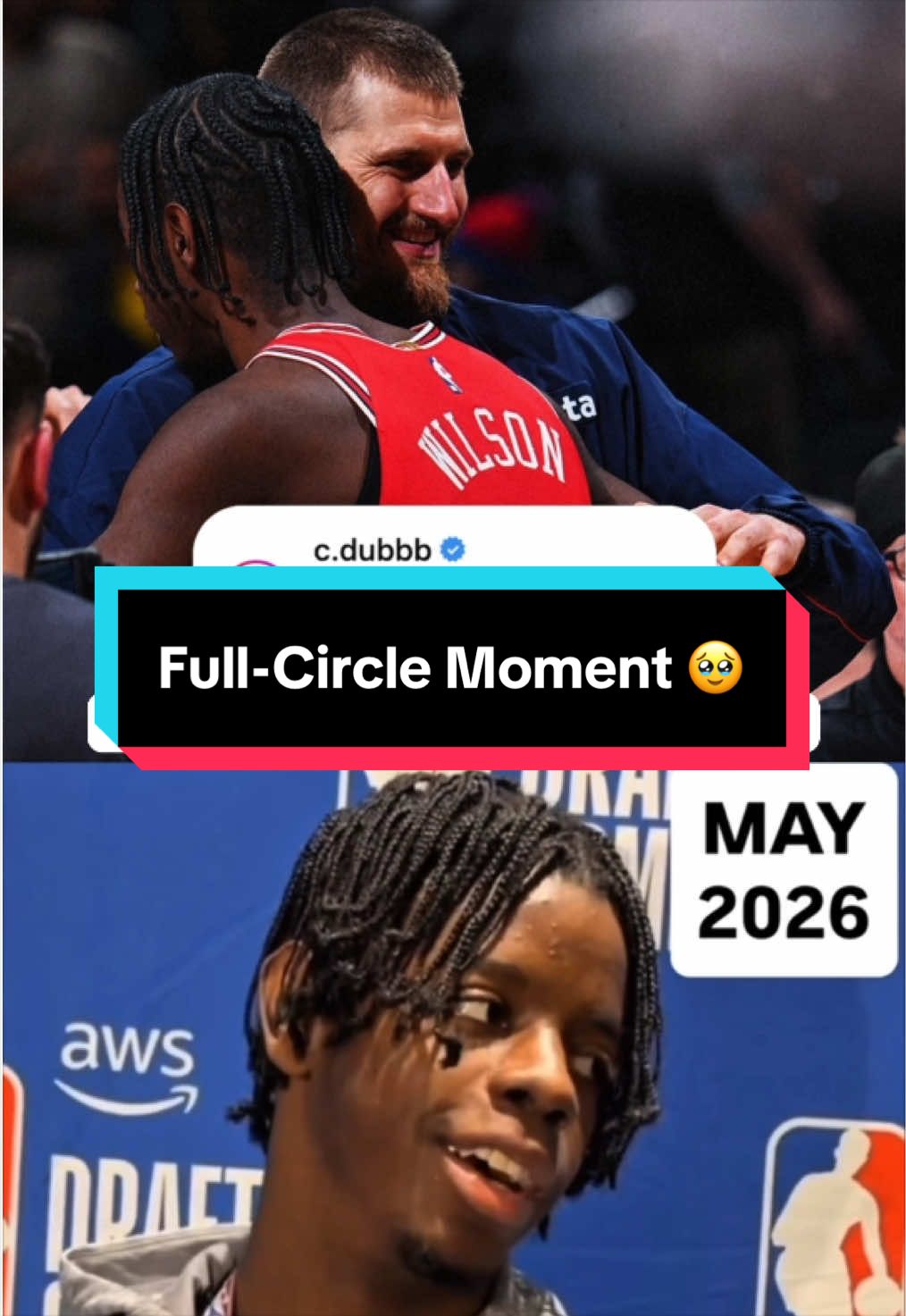
Caleb shared a special moment with Jokić after Bulls/Nuggets preseason matchup! (📸: @DNVR_Nuggets/X)
Good looks 🤝
Ja goes the distance for the slam 🏃

This moment when Shaq broke the backboard never gets old 😭

Coaches Corner powered by @AWS goes Inside the Game with San Antonio Spurs head coach Mitch Johnson and ESPN analyst Tim Legler as they explore how Victor Wembanyama's gravitational pull creates gaps and scoring opportunities for his teammates.

Bank on a little luck from the scoring champ. Limited Gold Luka bobbleheads await on 11/1 💛
 Links
Links
 Contact
 App
App


