



Attack or Counterattack? Li Jinyu's "Liaoning Derby" Decision



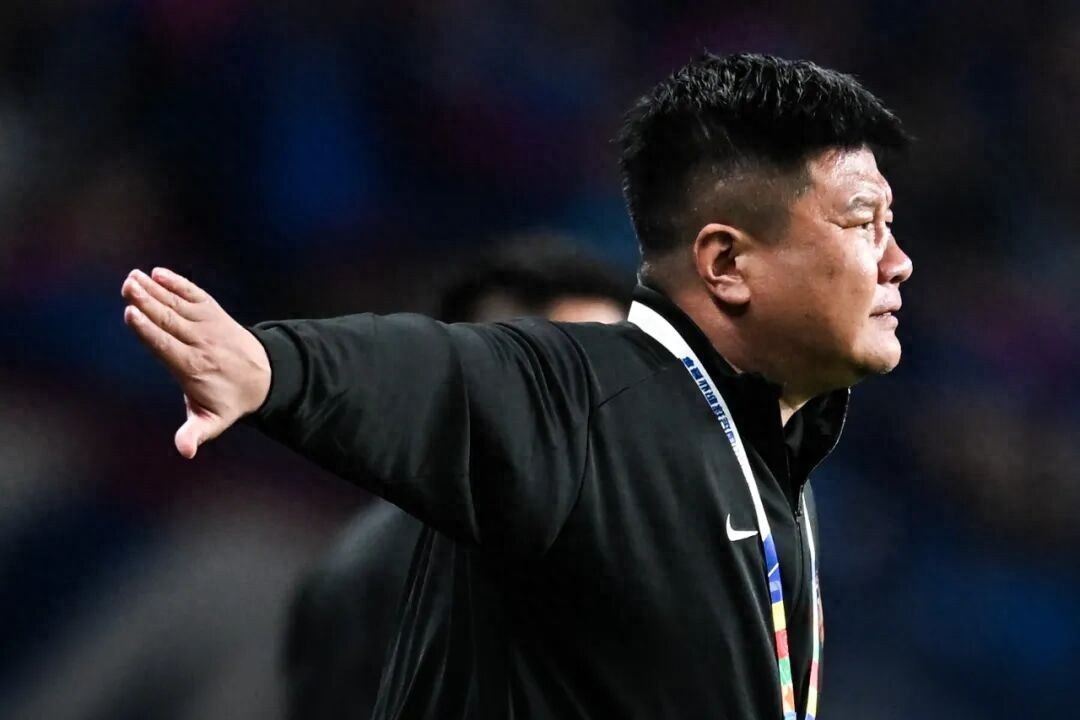
Special Contribution/Shen Jun The first "Liaoning Derby" of 2026 will be held at 7:35 PM on April 22nd, with 40,000 tickets already sold out last week. For Liaoning Ironmen, who recently suffered a defeat against Shenhua and are now playing at home, this match poses a significant challenge to the team's tactical adaptability and psychological pressure resistance, and is a key fight to uphold their home honor.

In the 6th round of the Chinese Super League, Ironmen lost 1-3 to Shenhua, marking their first defeat in the last four rounds and once again revealing the gap in strength between them and top-tier CSL teams. Unlike most newly promoted teams that adopt a conservative, defensive approach against strong opponents, coach Li Jinyu did not choose passive defense in this match but engaged in an attacking battle with Shenhua. The team achieved a 53% possession rate, had 18 shots (only one less than Shenhua), and even slightly outperformed in shots on target with 9 to 8, showing they were not inferior in both performance and statistics.
However, the outcome of a football match is never determined by mere data accumulation. The significant disparity in offensive and defensive efficiency ultimately decided the result. Ironmen trailed by three goals in the first half, while their 9 shots on target only yielded one goal. The lack of ability to capitalize on opportunities in front of the goal became the core reason for their loss.
During the match, Mbunza's performance was disappointing. He had multiple excellent scoring chances but failed to convert any of his six shots throughout the game, becoming a "pain point" in the attack. Additionally, Refinio also missed good opportunities.
On the defensive end, Ironmen also exposed weaknesses. Within just 37 minutes in the first half, the team conceded three consecutive goals, with the defense repeatedly showing issues of lack of concentration. Latang's follow-up shot and low drive, as well as Jin Shunkai's header, were related to defensive players' positional errors and delayed coverage. This defeat clearly indicated that although Ironmen possess certain attacking momentum and control over the game, there remains a noticeable gap compared to traditional strong teams like Shenhua in terms of offensive and defensive efficiency, key player performance, and in-game adjustments. To win the derby, Ironmen must address these problems.
At the post-match press conference, Li Jinyu did not avoid the team's issues and frankly admitted the gap with Shenhua. "There is indeed a gap. Shenhua's home atmosphere and the team's on-field momentum were excellent, putting us under significant pressure." Li Jinyu stated that although the team created many attacking opportunities, they failed to capitalize on them. "We will face our own shortcomings and give our full effort in upcoming matches, playing each game seriously." He also acknowledged that the opponent's key position players were significantly stronger.

In this derby, the current situations of the two teams are distinctly different. Yingbo has secured four consecutive wins, climbing into the top three of the standings, demonstrating strong resilience and explosive power. Conversely, Ironmen, after losing away in the last round, have seen their morale affected to some extent. Playing at home, they face considerable pressure. They carry the expectations of Liaoning fans and must strive for a desirable result to halt Yingbo's winning streak.
Thus, Li Jinyu's tactical decision becomes crucial—should he continue the previous attacking strategy, leveraging home advantage to confront the opponent head-on and maintain the team's offensive momentum? Or should he adopt a more pragmatic approach, employing a steady defensive counterattack tactic, focusing first on solid defense, then relying on Refinio's speed and Tian Yuda's aerial advantage to seek counterattack opportunities?
From a practical perspective, a steady defensive counterattack might be Ironmen's safest choice. Engaging in an attacking battle with Shenhua showed courage but also exposed the team's shortcomings in offensive and defensive efficiency. Yingbo's attacking firepower is not weak, and their counterattack efficiency is extremely high. If Ironmen continue to play an attacking game, they might once again fall into a passive position. Adopting a defensive counterattack strategy could compensate for the team's defensive weaknesses, reduce the opponent's attacking threats, and fully utilize their own counterattack advantages, using Refinio's speed to attack behind Yingbo's defense and seize opportunities when the opponent's stamina fluctuates or their defense slackens to score goals.
Meanwhile, Li Jinyu also needs to make adjustments in lineup deployment, strengthening midfield interception to avoid repeating the substitution mistakes from the last round, keeping core midfielders like Felipe on the field to serve as stabilizers for smooth transition between offense and defense. On the forward line, considering starting Tian Yuda to utilize his aerial advantage to constrain the opponent's defense, while urging Mbunza to improve his ability to convert chances in front of the goal and avoid wasteful shots.
Li Jinyu's tactical decision not only tests his in-game command ability but also his clarity regarding the team's positioning. Recognizing the gap without fearing the opponent, making reasonable tactical adjustments without resorting solely to defensive retreat, might be the key for Ironmen to gain an advantage in this derby match.


Wonderfulshortvideo

My @CLUB needs more fans!


The touch and the pass 😮💨

doku goal today haaland goal today cherki goal today man city 3-0 liverpool premier league news man city news

cherki goal today rayan cherki edit cherki vs liverpool

User esportapi has posted a video.

User esportapi has posted a video.

Just so cool 😎
 Links
Links
 Contact
 App
App


