



Monday's coffee: Rosenior leads Chelsea as an "online manager"



What's happening at Chelsea? It seems a bit strange, but everything is unfolding more like a video game than a professional club.
1. When was the last time Chelsea lost four consecutive matches and couldn't score a single goal in domestic competitions? You have to turn back the clock over… 100 years to find a Chelsea version that bad.
That was the 1912/13 season, when Chelsea first got promoted, and immediately finished 18th out of 20 teams in the First Division. Their biggest star was an… amateur player: Vivian Woodward even didn't receive a salary to play football. He had retired a few years earlier to focus on his main job, but Chelsea persuaded him to return to play football for… fun.
Despite being one of England's greatest players at that time, Woodward earned his livelihood mainly as an architect and owned a dairy farm. When too busy, he even couldn't attend matches. Woodward maintained his status as a lifelong amateur athlete because he didn't want to bind himself and considered football merely a game.
It's no surprise Chelsea narrowly avoided relegation with that attitude from their top star. Over 100 years later, a mountain of money has poured into Stamford Bridge and changed many things, but the "for fun" attitude seems to have returned.
2. A Chelsea fan commented on social media like this after the loss to Manchester United: "Missing goals, but Liam Rosenior brings on two defenders and one defensive midfielder? Chelsea isn't a place for trial runs? I thought I was playing Football Manager (a globally famous football management game)."
Rosenior is indeed enjoying the feeling of a manager in… a game: He rotated systems and personnel over 17 matches, accompanied by Chelsea's steep decline. He pieced things together exactly like a typical online manager, placing players in every position without considering harmony or their habits.
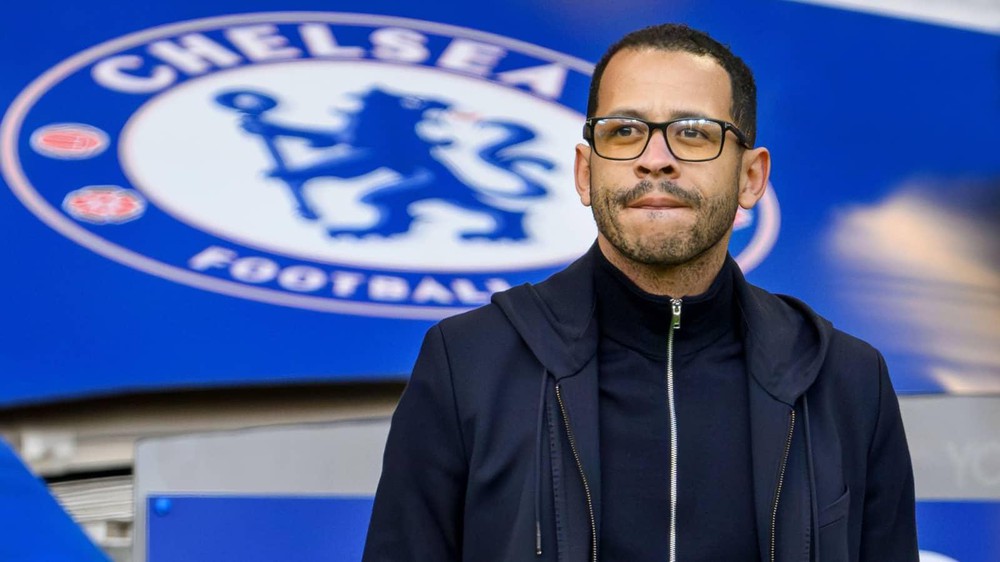
Liam Rosenior is managing the team in the style of an online manager. Photo: Getty
Rosenior also behaves like a typical manager in a role-playing game: He sits calmly then suddenly jumps up to give instructions when seeing his image on the stadium's big screen. He wrote a tactical instruction note for players when Chelsea was trailing by… 6 goals and the match had passed the 84th minute. It served no purpose other than "showmanship."
The appointment of Rosenior also has a video game atmosphere: Chelsea's owners placed a young manager with no experience or achievements into the hot seat, just because he was a young man working at one of the satellite clubs. You probably understand the feeling of discovering a gem in a game, trusting him, and guiding that raw gem to success.
But life isn't a game, and this lack of seriousness from top to bottom is pushing Chelsea into a deep pit.
3. Chelsea is playing an expensive video game: They spent up to £1.5 billion on new contracts in recent years, mostly for… young players, without any major stars. This transfer approach also easily reminds you of strategies in football management games, where players want to challenge themselves with potential contracts without star ratings.
At the end of the 2024/25 season, Chelsea recorded a loss exceeding £262 million, a record in Premier League history. Operating costs surged sharply, with the wage bill swelling by £21 million per season and agent fees increasing by £65 million only during the summer 2025 and January 2026 transfer windows.
Before the match against MU, about 500 people protested against the American owners and their decisions, demanding Chelsea make major changes at the top. The blue-shirted team faces the risk of missing the Champions League for the third time in four recent seasons: They currently lead the 14th-placed Newcastle by a margin exactly equal to two wins.
If this were a thriving club, maintaining a high league position and qualifying for European cups continuously, then owners and managers wanting to play a bit of video games wouldn't matter: The game reflecting individuality in that context might create some significant breakthrough. When keeping a playful feeling, people often innovate unpredictable and breakthrough moves. But being poor and addicted to gaming is truly a disaster. And money to burn for the enjoyment of the game is usually bottomless.


Wonderfulshortvideo

My @CLUB needs more fans!



The touch and the pass 😮💨

doku goal today haaland goal today cherki goal today man city 3-0 liverpool premier league news man city news

cherki goal today rayan cherki edit cherki vs liverpool

User esportapi has posted a video.

User esportapi has posted a video.
Just so cool 😎
 Links
Links
 Contact
 App
App


