



Vietnam U17 vs Australia U17: A True Challenge for World Cup Ambitions


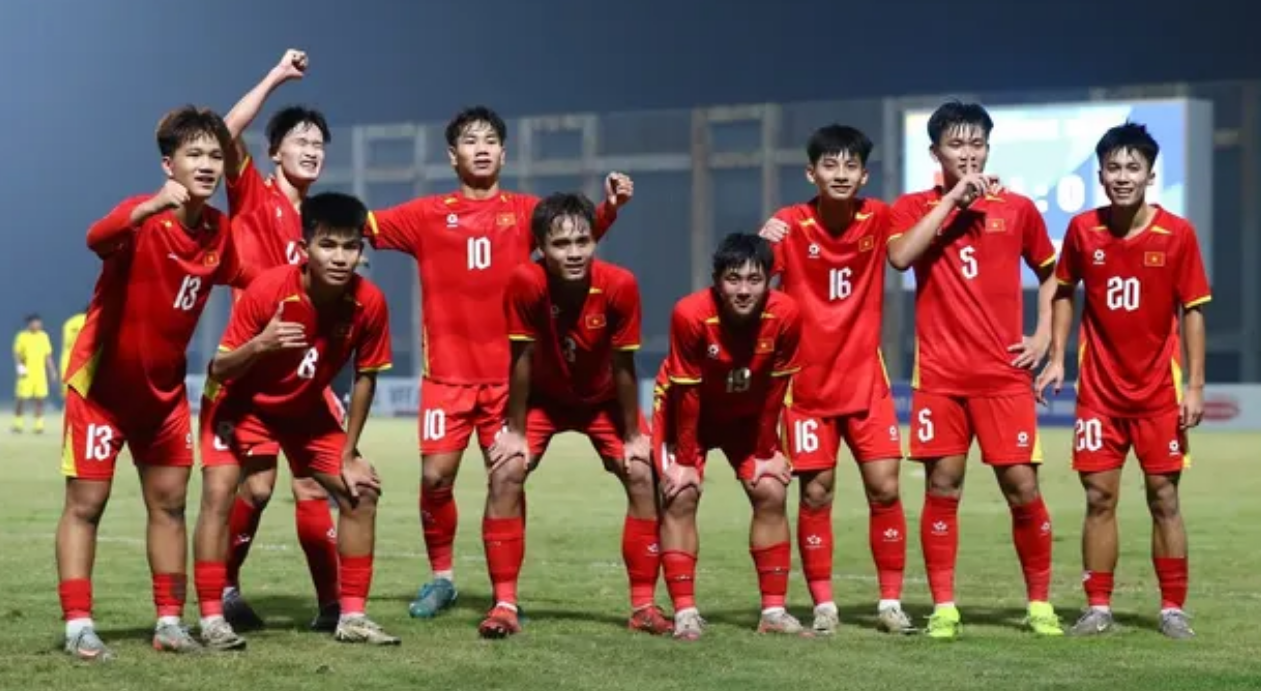
In the 2026 Southeast Asian U17 Championship semifinal, Australia U17 is rated higher than Vietnam U17. The Kangaroo nation's team is the current tournament champion and is doing everything to defend its top position.
For Vietnam U17, coach Cristiano Roland's squad concluded the group stage of the 2026 Southeast Asian U17 Championship to advance to the semifinal as Group A winners with an unbeaten record.
Coach Cristiano Roland's team shows clear progress in organizing gameplay, controlling the match situation, and defensive discipline. Since the 1-2 loss to Ehime U18 (Japan) in November 2025, the "Golden Star Warriors" have maintained a streak of 8 consecutive matches without conceding a goal.
Coach Cristiano Roland possesses several players currently in high form within the squad, such as Chu Ngoc Nguyen Luc, Nguyen Van Duong, Le Sy Bach, and Le Trong Dai Nhan.
Aiming for the best outcome at the upcoming AFC U17 Championship finals, the clash with Australia U17 is not just about securing a Southeast Asian final ticket. It will serve as a basis to assess the feasibility of Vietnam U17's upcoming major goals. However, the scoreless draw with Indonesia U17 in the final Group A match reflects limitations in Vietnam U17's ability to convert opportunities. Despite completely dominating the match and creating many chances, Coach Cristiano Roland's players could not penetrate the Island nation's defense.
Australia U17 enters the 2026 Southeast Asian U17 Championship semifinal as the tournament's reigning champion. This team is the only representative to win all group stage matches, securing a full 9 points. Australia U17, along with Vietnam U17, will create a matchup featuring the tournament's most effective offense and defense.
Australia U17 is highly rated for its squad strength and expertise. They maintain a familiar style of utilizing physique and stamina to control duels and deploy long, high balls. Additionally, under coach Carl Veart's guidance, Australia still has a short-passing game plan thanks to some technically skilled players.
Overall, Australian teams from youth to top levels share many similarities in playing style. Physical advantages help the Kangaroo nation's team easily dominate in one-on-one duels. This grants them better control capability. Australia U17 plays straightforward football, prioritizing high balls and long passes to maximize strengths. When needing to disrupt the opponent's defense, coach Carl Veart also has arrangements deploying agile and skillful players on both wings.
In this year's tournament, the reigning champion continues to display an effective combined style of superior physical foundation and composure in key moments. After 3 group stage matches, the "Socceroos" scored 15 goals (the tournament's highest) and conceded none.
Since switching to AFC in 2006, the Kangaroo nation's team has missed the continental stage only once. In the U17 World Cup, Australia is the sole AFF representative to advance past the group stage.
In the most recent regional encounter in 2017 (when the tournament was still for U15 age group), the "Golden Star Warriors" defeated Australia 2-0 in the semifinal. Subsequently, they remained unbeaten in all 4 meetings against Vietnam U16/U17.
The semifinal between Vietnam U17 and Australia U17 will take place at 7:30 PM on April 22.


Wonderfulshortvideo

ronaldo messi stats ronaldo vs messi edit ronaldo news today messi news today



My @CLUB needs more fans!
The touch and the pass 😮💨

doku goal today haaland goal today cherki goal today man city 3-0 liverpool premier league news man city news

cherki goal today rayan cherki edit cherki vs liverpool

User esportapi has posted a video.

User esportapi has posted a video.
 Links
Links
 Contact
 App
App


