



Things to look forward to at the 2026 World Cup



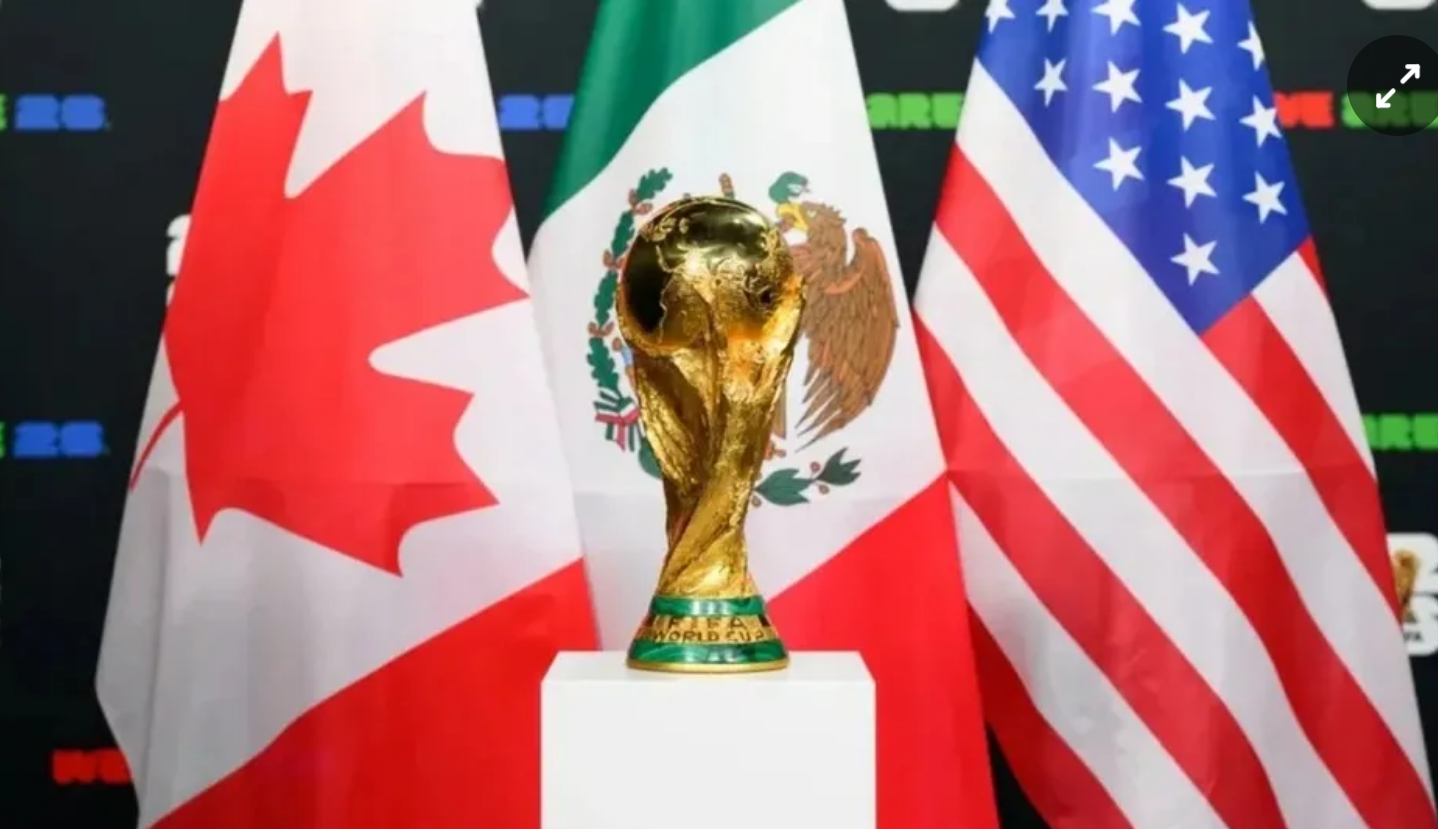
The 2026 World Cup will mark a historic milestone as it is the first time the tournament is co-hosted by three nations, with 48 teams taking part. The group stage will consist of 12 groups, each containing four teams.
The top two teams from each group, along with the eight best third-placed teams, will advance to the round of 16. In total, 104 matches will be played. The World Cup will last 38 days, starting on June 12, with the final taking place on July 20.
Numerous controversies arose before the 2026 World Cup. There has been much talk about expensive ticket prices, travel costs, warnings of disease risks, extreme heat, entry issues for certain countries, and debates regarding FIFA's management.
But after all the controversies, concerns, and side stories, the 2026 World Cup is now very close. And like previous World Cups, what remains in the memories of fans are the mesmerizing football moments that captivate audiences worldwide.
The pre-tournament concerns about infrastructure, transportation, and social issues that emerged in South Africa, Brazil, Russia, and Qatar were ultimately overshadowed by the massive appeal of the matches. The 2026 World Cup will likely be no exception.
The 2026 World Cup marks the first time three countries co-host the event. A total of 16 cities across North America will host matches, creating an unprecedented travel route in the tournament's history. The most obvious challenge this time is the enormous scale of the event. Spanning three large countries with 16 host cities and four time zones, the movement of teams and fans becomes difficult.
This summer, the expansion to 48 teams also brings greater opportunities for surprises. Names like Jordan, Curacao, Cape Verde, and Uzbekistan will step onto the world's biggest stage, hoping to write their own fairy tales. That is also why the World Cup is always considered the greatest sporting event on the planet. It is a stage where small teams can change the history of football in their home country after just one match.
The race for the 2026 World Cup title has become unusually balanced. Nearly a dozen "giants" have almost equal hopes before the starting line. Argentina, Brazil, England, France, Germany, and Spain remain the top contenders for the championship. Portugal is seen as the team with the greatest potential to reach the top of the world for the first time, but it would be a huge surprise if the trophy does not go to one of the aforementioned powerhouses.
Rarely has a World Cup gathered so many generations of stars as this one. From legends entering the final stage of their careers like Lionel Messi and Cristiano Ronaldo, to superstars dominating world football such as Kylian Mbappe, Erling Haaland, Vinicius Junior, and Jude Bellingham. In between are faces representing the future, like Lamine Yamal or the symbol of the host nation, the USA, Christian Pulisic.
If Messi and Ronaldo represent a glorious past, then Mbappe and Bellingham embody contemporary football.
Mbappe is perhaps the brightest star. At 27, the captain of the French national team enters the most perfect stage of a professional player's career. Mbappe possesses every quality to become the face of the 2026 World Cup: speed, goal-scoring ability, composure in big matches, and global appeal.
Meanwhile, Bellingham embodies the new golden generation. Not many young midfielders in the world possess the all-around ability of the player born in 2003. Bellingham can score, assist, contest, and dictate the tempo at the highest level. After nearly 60 years of waiting for a World Cup title, England places great hopes in their future captain.
Yamal is the young player receiving the most attention at this year's World Cup, as the new symbol of Spanish football. Since his first-team debut for Barcelona at just 15, this winger has shown genius qualities with rare technique and ability to create breakthroughs.
At EURO 2024, Yamal continued to explode with a key goal against France and four assists, contributing greatly to Spain's run to the final. What Yamal has shown in recent years indicates that this is not merely an outstanding young talent, but a player with the potential to become an icon for an entire generation. The 2026 World Cup could be where Yamal officially enters the ranks of global superstars.
From now until the final in New Jersey on July 19, the football world will witness many things. Legends like Messi, Ronaldo, or Luka Modric may say goodbye to the biggest stage of their careers. And football fans around the world also hope that a new "king" will emerge, capable of challenging the greatest monuments in World Cup history like Pele and Diego Maradona.
It is precisely players like Mbappe, Bellingham, and Yamal who will bring new stories, new surprises, and new emotions to the tournament. The 2026 World Cup is therefore not simply a race for the golden trophy.
The 2026 World Cup is promising to be a "technological feast" for world football. If the 2022 World Cup in Qatar was remembered as the tournament that introduced semi-automated offside technology and real-time data into football, this year's edition could become a congress marked by artificial intelligence (AI).
At the 2026 World Cup, FIFA continues to deploy a new generation of semi-automated offside technology with the ability to send faster alerts to the referee team. The system uses an optical camera network placed around the pitch to track player and ball movements in real-time, thereby assisting in determining offside situations within seconds.
From refereeing, tactical analysis, to fan experience, technology is present in almost every aspect of the 2026 World Cup.
Estadio Azteca will be the first stadium in football history to host the World Cup opening match three times. It is the place where the two great legends Pele and Diego Maradona lifted the World Cup trophy. To date, no one has matched the glory of Pele and Maradona at Estadio Azteca.
A World Cup associated with the name Estadio Azteca always introduces a new monument that the world has never seen before. It has happened twice, and this is perhaps the most intriguing detail to watch at this year's tournament.
The 2026 World Cup is expected to open a new chapter for world football with an unprecedented scale and influence.
The 2026 World Cup opening ceremony at Estadio Azteca will begin 90 minutes before the match, at 0:30 on June 12, ahead of the Group A opener between Mexico and South Africa (which kicks off at 2:00).
After the World Cup 2026 opening ceremony in Mexico, the next opening ceremony will be held in Canada, also 90 minutes before the host team's first match against Bosnia & Herzegovina at 2:00 on June 13 at BMO Field in Toronto.
Following that is the opening ceremony in the United States, held at SoFi Stadium in Los Angeles just before the US national team, the other co-host, plays their opening match against Paraguay in Group D at 8:00 on June 13.


Wonderfulshortvideo

olise nike contract olise news today football news today olise hypervenom



Désiré Doué’s face 😆😆

User ChampionChatter has posted a video.

Would lowkey love to see HH play up front soon 😅

messi story young messi edit messi barcelona news today

ronaldo news today ronaldo jorge jesus drama ronaldo edit football news today

User esportapi has posted a video.
 Links
Links
 Contact
 App
App


