



World Cup 2026: Match between France and Iraq postponed due to thunderstorms



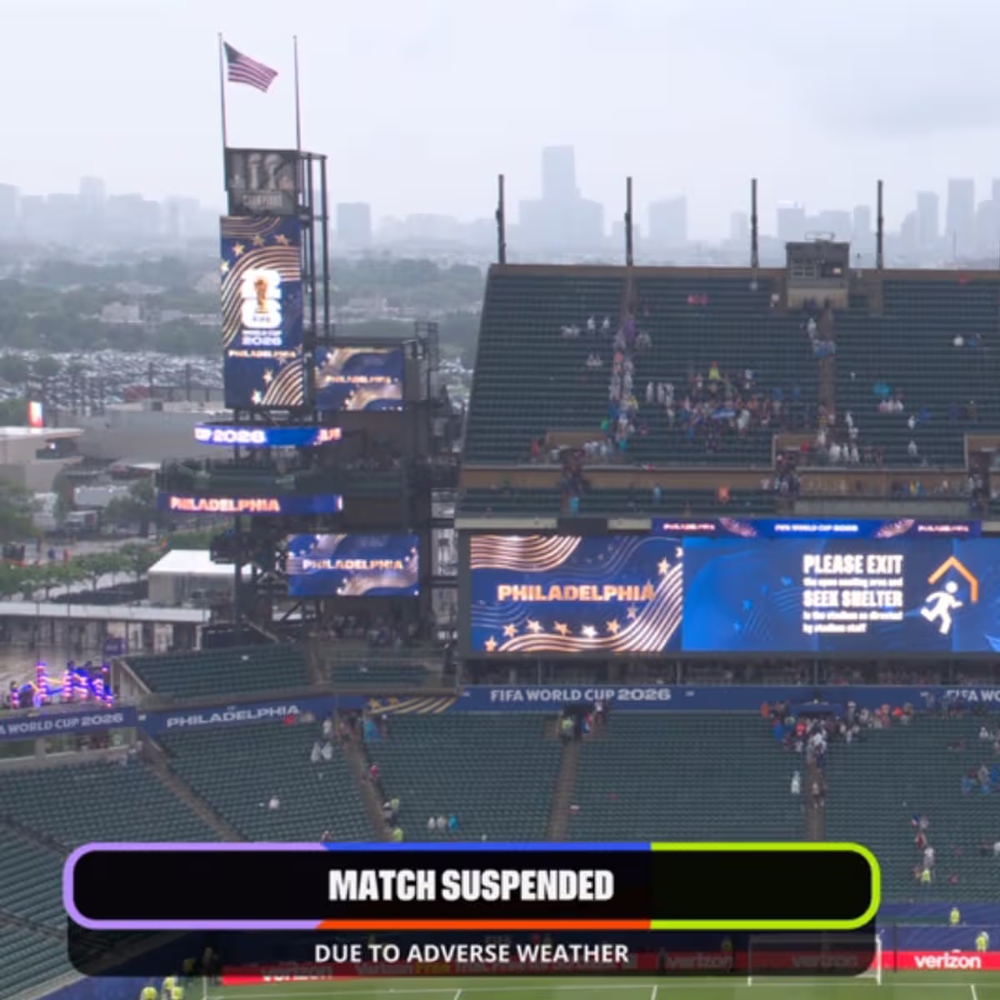
Although the two teams had finished the first half, the clash in Philadelphia could not resume after a lightning warning was issued in the area.
This incident occurs as the 2026 World Cup, hosted in the US, Canada, and Mexico, faces numerous weather challenges. In addition to extreme heat, thunderstorms with lightning are considered one of the factors that could severely impact the match schedule.
As soon as the safety risk was detected, the organizers activated the Severe Weather Protocol. Players, coaching staff, and the refereeing team were instructed to leave the pitch, while spectators in open seating areas were guided to move to safe shelter zones.
According to the safety regulations currently in effect in the US, outdoor matches must be suspended if lightning is detected within about 8 miles (13 km) of the stadium. The match can only resume after no lightning has been recorded for at least 30 minutes. If additional lightning occurs during this period, the countdown clock resets, potentially causing the interruption to last for hours.
This means a World Cup match could potentially be prolonged in an unusual manner. At last summer's FIFA Club World Cup, the match between Benfica and Chelsea was postponed for about two hours due to bad weather in Charlotte (USA), making the total duration of the match exceed four and a half hours.
FIFA currently has no specific regulation on when a match must be canceled due to weather. The final decision will be made on a case-by-case basis, with absolute priority given to the safety of players and spectators.

Before the interruption, France was leading Iraq 1-0 thanks to a goal by Kylian Mbappé. The blue-clad team controlled possession better, applied constant pressure, and demonstrated superior squad quality. However, Iraq still played with great effort, defended disciplinedly, and waited for counterattack opportunities.
The match interruption makes the second half situation unpredictable. France might lose their attacking rhythm after a long break, while Iraq gains extra time to adjust tactics and prepare for the remainder of the match.
The incident in Philadelphia also serves as a warning about the difficulties the 2026 World Cup may encounter. Among the US stadiums used for the tournament, only a few venues with fixed or retractable roofs—such as NRG Stadium, AT&T Stadium, Mercedes-Benz Stadium, and SoFi Stadium—can mitigate the effects of lightning. Most other stadiums remain at risk of suspension if weather conditions deteriorate.
Although the schedule may be disrupted, the message from FIFA and the Organizing Committee remains clear: safety always comes first, even if it means the world's most thrilling matches have to wait.


Wonderfulshortvideo

The walk in question 😮💨



🔉How to travel a horse to the races!

User ChampionChatter has posted a video.

Jamie Vardy doing Jamie Vardy things ⚽️

olise nike contract olise news today football news today olise hypervenom

Désiré Doué’s face 😆😆

User ChampionChatter has posted a video.
 Links
Links
 Contact
 App
App


