



World Cup 2026: When AI Enters the Field



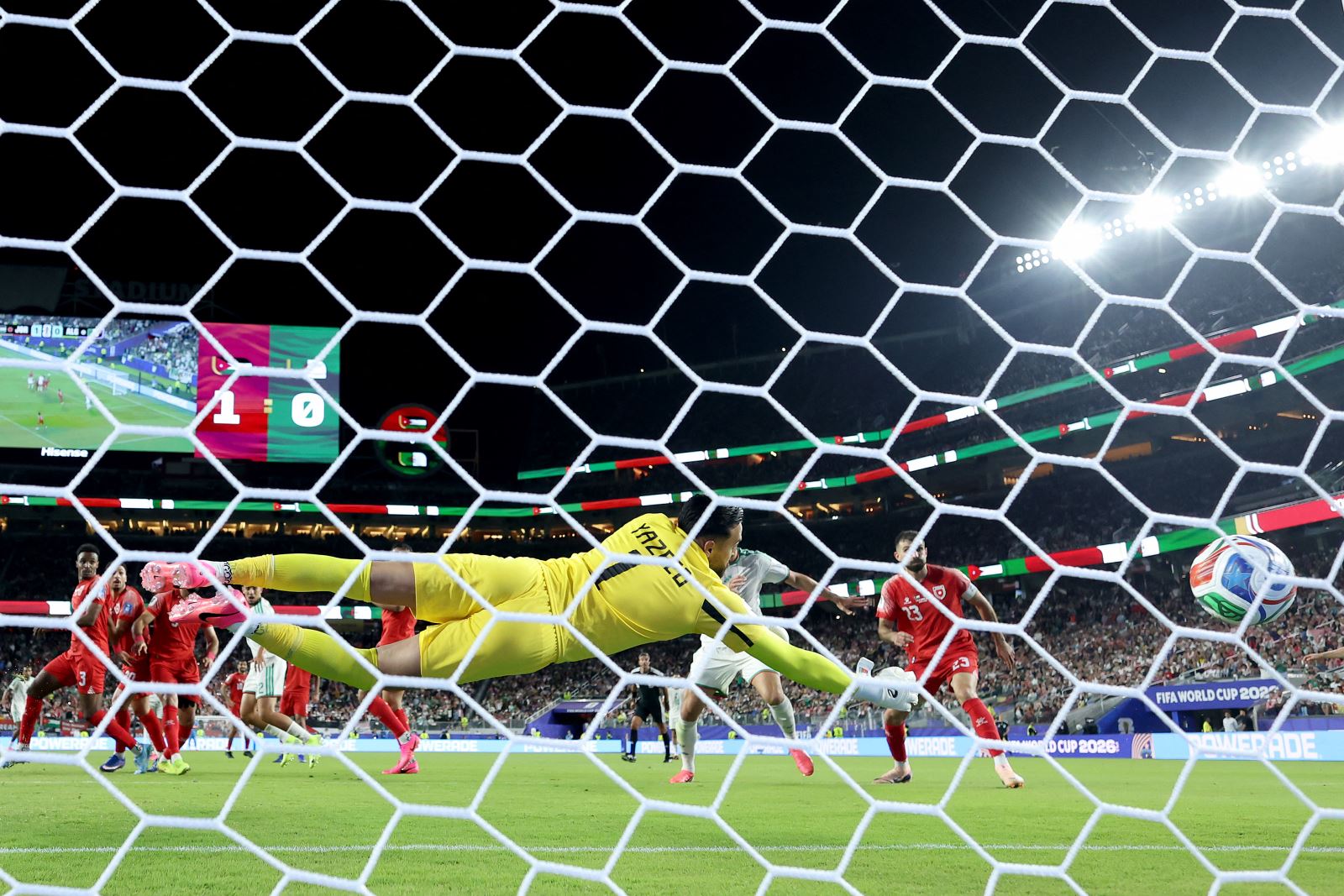
According to a VNA correspondent in Australia, this year's tournament witnesses an unprecedented intersection of sports science and technological progress. From miniature cameras attached to referees (Ref-cams) to Artificial Intelligence (AI) systems serving as real-time tactical assistants, technology is no longer merely a support tool but is directly reshaping how matches are run, how coaches devise strategies, and how billions of fans enjoy the sport.
One of the most visually striking and media-breaking innovations is the Ref-cam system, which consists of ultra-small, lightweight action cameras subtly integrated onto the chest or glasses of head referees.
For television viewers, Ref-cams offer an unprecedented experience. Fans no longer only see the match from panoramic cameras in the stands, but also experience the visual perspective right from the referee's position: witnessing the dizzying speed of the ball, breathless tackles, and even intense player reactions from just a few dozen centimeters away.
However, for sports science researchers, Ref-cams are not just for entertainment. The image data captured by these cameras is extremely useful for analyzing decision-making processes under extreme pressure. Scientists can study where the referee actually looks when a challenge occurs—for example, at the player's leg, the ball, or facial expressions. Ref-cam data also helps evaluate whether the referee's positioning was optimal, thereby designing movement drills for future generations of referees, helping them always have the clearest view in sensitive situations.
If ten years ago, football analysts had to manually record every pass, at this World Cup, AI has taken over and elevated this work to a whole new level. Through a dense network of optical cameras installed around the stadium's roof, the AI system continuously tracks the three-dimensional coordinates of all 22 players and the ball at a frequency of 50 to 100 times per second.
Instead of just providing conventional statistics like ball possession or distance covered, AI can automatically calculate tactical gaps by measuring open spaces created when a team shifts formation, thereby identifying where opponents are vulnerable. Additionally, by analyzing acceleration frequency and movement patterns of each player, AI can alert the coaching staff when a midfielder shows signs of overload or physical decline, even before the player visibly shows it.
In particular, technical assistants now continuously receive graphical analyses and tactical change suggestions proposed by AI directly on tablets. The strategic battle among coaches now has a significant contribution from intelligent algorithms.
The Semi-Automated Offside Technology (SAOT) continues to be upgraded at this World Cup thanks to a perfect combination of hardware inside the ball and external image processing software.
The official match ball contains an inertial measurement unit (IMU) sensor placed at its center. This sensor sends position and acceleration data to the system at an astonishing rate: 500 times per second, allowing precise determination of the exact moment the ball leaves the passer's foot. Meanwhile, dedicated camera systems closely track 29 points on each player's body (including all body parts that can be used to score, such as head, knee, toe). When a suspected offside occurs, AI combines data from the ball and player skeletons to rebuild a 3D model of the offside situation within seconds, helping VAR referees make quick decisions, minimizing dead ball time and maintaining the match's emotional flow.
Modern football demands extremely high physical intensity, and protecting the biggest asset of teams—the players—is a top priority.
The latest studies applied at the World Cup focus on ultra-small biometric wearable devices sewn into players' shirts. These devices monitor heart rate, impact forces players endure when fouled, blood oxygen levels, and body hydration levels.
Although this data is largely kept confidential for tactical and privacy reasons, it provides the scientific basis for medical experts to design personalized muscle recovery protocols for players, and to early predict risks of muscle tears or ligament injuries.
The deep intervention of science and technology in the World Cup has also faced considerable skepticism. Conservatives argue that new technology is 'programming' the beautiful game, eliminating all human error factors which are part of football's drama and appeal. However, much evidence and practical research show that technology does not eliminate the romance of football; it is 'cleaning up' the game by ensuring maximum fairness, protecting the health of field talents so they can perform longer, and giving fans an unprecedented visual experience of the match.


Wonderfulshortvideo

The walk in question 😮💨



🔉How to travel a horse to the races!

User ChampionChatter has posted a video.

Jamie Vardy doing Jamie Vardy things ⚽️

olise nike contract olise news today football news today olise hypervenom

Désiré Doué’s face 😆😆

User ChampionChatter has posted a video.
 Links
Links
 Contact
 App
App


