



The impressive resume of the new head of the Italian national football team: A woman who has won two Olympic gold medals



Diana Bianchedi has officially been selected as the head of the Italian national football team, taking over from the legendary Gianluigi Buffon. The announcement by FIGC President Giovanni Malagò instantly attracted attention, not only due to Bianchedi's non-football background but also because she occupies a significant role in the Italian Olympic Committee (CONI), sparking debate about possible conflicts of interest.
After Gianluigi Buffon left his position as head of the Italian team at the end of March, following the defeat to Bosnia & Herzegovina in the World Cup playoff final, FIGC had to search for a new figure for this special role. The chosen person was Diana Bianchedi, a name with a remarkable background in Italian sports.
The appointment decision was announced by FIGC President Giovanni Malago in an interview with La Gazzetta dello Sport on August 9.
Notably, the three most recent individuals to hold the position of head of the Italian team before Bianchedi were all famous figures in Italian football: Buffon, Gianluca Vialli, and Gigi Riva. In contrast, Bianchedi comes from a completely different sport: fencing.
Two-time Olympic champion and an impressive sports career
Diana Bianchedi was once one of the most outstanding female fencers in Italy. She won two Olympic gold medals, in 1992 and 2000, leaving a strong mark in the history of Italian sports.
After ending her competitive career, Bianchedi did not leave sports but moved into management and administration. In 2001, she became the youngest person ever appointed to an executive position at CONI, and also the first woman to hold this role. By 2025, Bianchedi was further appointed Vice President of the Italian Olympic Committee. Recently, she continued to hold a senior position in the organizing body of the Milano-Cortina 2026 Winter Olympics and Paralympics, thereby gaining experience in managing international-scale sports events.
Not only does Bianchedi possess an impressive record in the sports arena, but she also has a unique academic background. She holds a degree in Medicine and Surgery, as well as a master's degree in sports management. Bianchedi also played a key role in the lobbying and preparation of Italy's Winter Olympic bid dossiers, including projects related to Rome 2024 and Milano-Cortina 2026.
This is why Giovanni Malago considers Bianchedi a figure of special prestige and international standing. "Diana has international prestige and credibility, is a two-time Olympic champion, possesses a resume with extensive expertise, a medical degree, a master's in sports management, holds an important position at Milano-Cortina, and is Vice President of CONI," Malago emphasized.
According to Malago, bringing a figure with an Olympic and fencing background into the position of head of the Italian football team is not a random choice. He wants football to no longer be seen as a world separate from the rest of Italian sports.
The FIGC President believes that Bianchedi holding a leadership position at CONI while also becoming the institutional face of the Italian team can create a new connection between football and the entire national sports system. "It's a revolution. Being Vice President of CONI and simultaneously becoming the institutional face of the Italian football team is like bringing football back to the center of a 360-degree dialogue with the rest of sports," Malago explained.
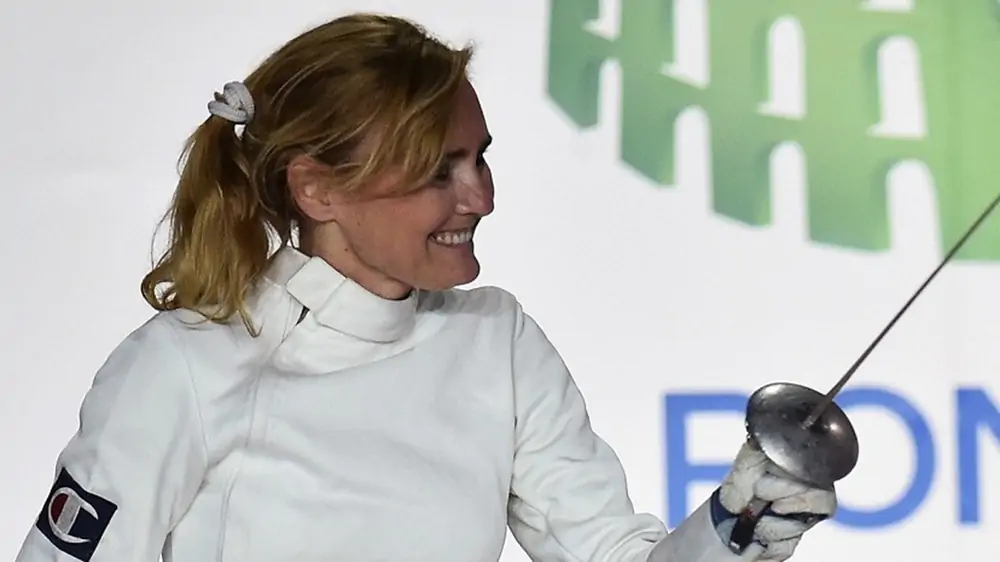
Diana Bianchedi was once one of the most outstanding female fencers in Italy - Photo IG.
Controversy
However, this very dual role quickly sparked controversy.
Immediately after Malago announced the decision, the Italian Olympic Committee (CONI) announced it would assess the suitability of Bianchedi simultaneously holding two roles. The reason is that Bianchedi currently remains Vice President of CONI and a member of its National Executive Committee.
CONI wants to determine whether her simultaneously holding the position of head of the national team under FIGC creates issues of suitability, eligibility, or conflict of interest.
In an official statement, CONI said that the relevant departments and authorities have been activated to evaluate issues related to "suitability, eligibility, and compatibility," in order to protect the functioning of the National Executive Committee.
The regulation cited by CONI is Article 7, paragraph 4 of the CONI Statute. According to it, if a member of the National Executive Committee falls into a state of permanent conflict of interest, that person may be considered no longer suitable for the position and must leave the role.
This puts Bianchedi's appointment as head of the Italian team under question even as the decision was just announced.
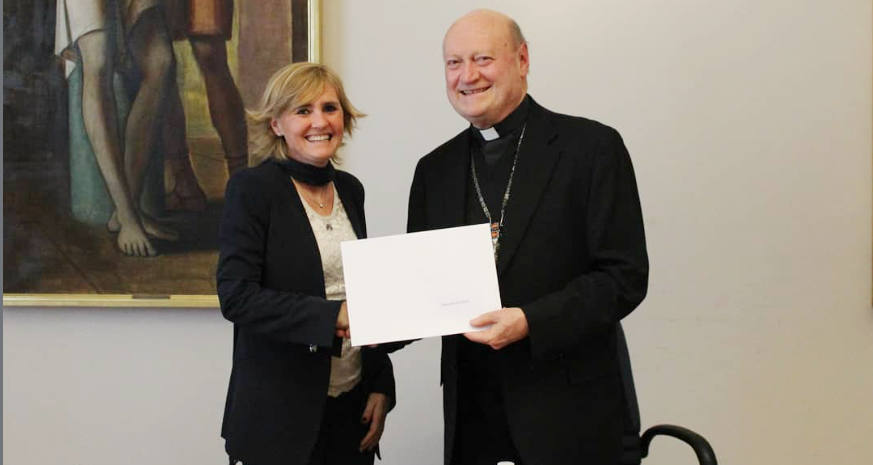
Not only does Bianchedi have an impressive record in sports, but she also has a special academic background - Photo IG.
Nevertheless, FIGC quickly expressed a completely different viewpoint. Sources from the Italian Football Federation affirmed that there is no conflict of interest in Bianchedi simultaneously holding a position at CONI and serving as head of the national team.
FIGC argues that no law or regulation explicitly states that a member of CONI's Executive Committee cannot hold a position in a sports federation. More importantly, FIGC emphasizes that the role of head of the team assigned to Bianchedi is representative and institutional support, not an executive position in team management. According to FIGC's view, Bianchedi's work is mainly to represent and accompany the team and FIGC in institutional activities. Therefore, the federation does not believe that this position creates a "permanent conflict of interest" as mentioned in Article 7 of the CONI Statute.
The debate between CONI and FIGC may therefore continue in the coming period. But regardless of the final outcome, Diana Bianchedi's resume has shown that FIGC is moving towards a very different choice.


Wonderfulshortvideo
haaland news today haaland transfer real madrid news today barcelona news today


Two goals and an assist ⚡️
The best saves from MD3 and MD4 👏
User VictoryVox has posted a video.
User esportapi has posted a video.
From relaxation to domination 😮💨
messi crying messi last game argentina messi enzo fernandez messi farewell edit messi edit ronaldo portugal
 Links
Links
 Contact
 App
App


